Xia Li

About the PI

I am a tenure-track Associate Professor and Ph.D. supervisor at the School of Biomedical Engineering, Shanghai Jiao Tong University, where I lead the MedAPT group: Medical AI for Precision Therapy.

My research lies at the intersection of machine learning, computer vision, medical imaging, and radiation oncology. I am particularly interested in developing advanced imaging algorithms for image-guided precision radiotherapy, with a focus on proton therapy. Our group works on accelerating and improving core medical imaging methods, including image reconstruction, synthesis, registration, segmentation, uncertainty estimation, and dose-related modeling, with the goal of making precision cancer treatment faster, more accurate, and more accessible.
Before joining Shanghai Jiao Tong University, I received my Ph.D. in Computer Science from ETH Zurich and continued as a postdoctoral researcher at the Institute for Biomedical Engineering, ETH Zurich. I received my M.Sc. from Peking University. I have served as an Area Chair for ICML and NeurIPS, and my work has been recognized by the ICCR 2024 Rising Star Award, Stanford’s World’s Top 2% Scientists list, and awards in the COCO Challenge.

Position Constraint Loss For Fashion Landmark Estimation

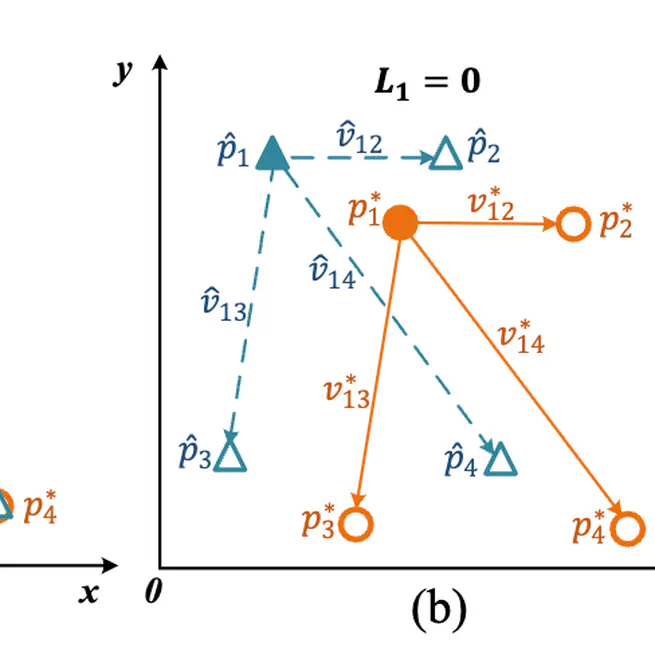
A Position Constraint Loss (PCLoss) method for fashion landmark estimation that constrains error landmark locations by utilizing position relationships, applicable to both regression and heatmap-based methods without modifying network structure.

May 4, 2020

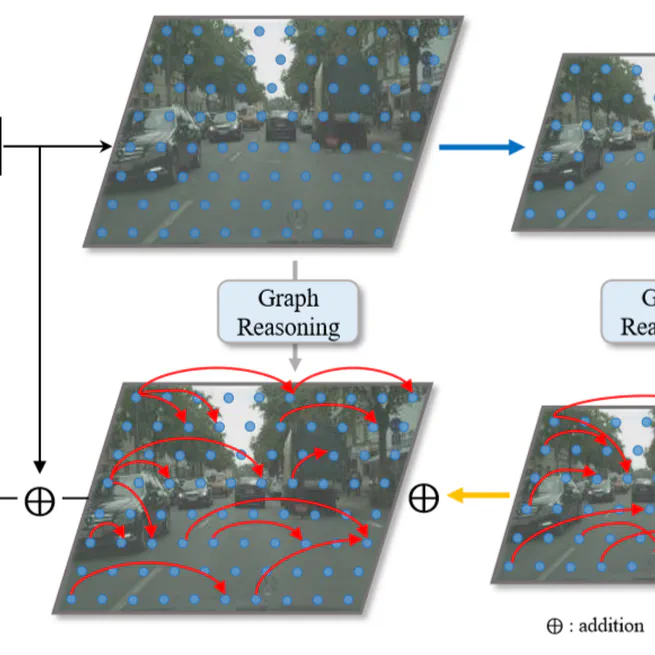
Spatial Pyramid Based Graph Reasoning for Semantic Segmentation

Feb 24, 2020

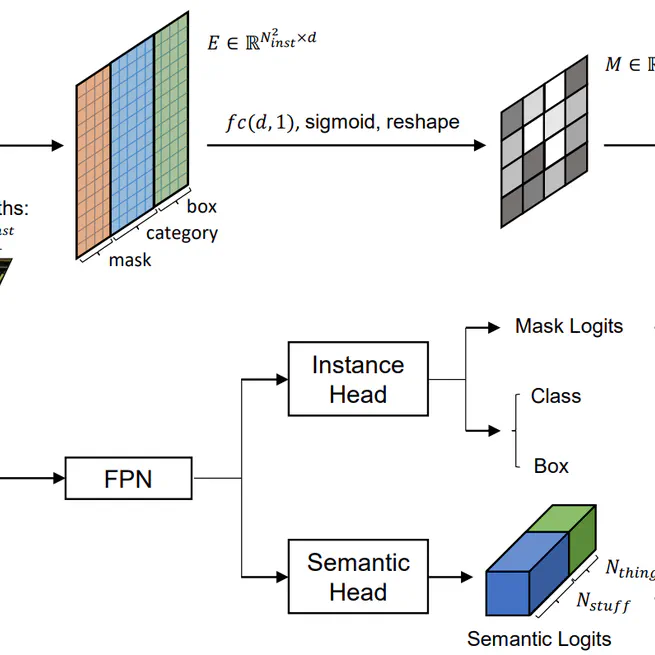
SOGNet: Scene Overlap Graph Network for Panoptic Segmentation

We leverage each object’s category, geometry and appearance features to perform relational embedding, and output a relation matrix that encodes overlap relations. In order to overcome the lack of supervision, we introduce a differentiable module to resolve the overlap between any pair of instances.

Feb 7, 2020

Dynamic System Inspired Adaptive Time Stepping Controller for Residual Networks Families

We analyze the effects of time stepping on the Euler method and ResNets. We establish a stability condition for ResNets with step sizes and weight parameters, and point out the effects of step sizes on the stability and performance. Inspired by our analyses, we develop an adaptive time stepping controller that is dependent on the parameters of the current step, and aware of previous steps.

Feb 7, 2020

ICCV 2019 Oral
ICCV 2019 Oral

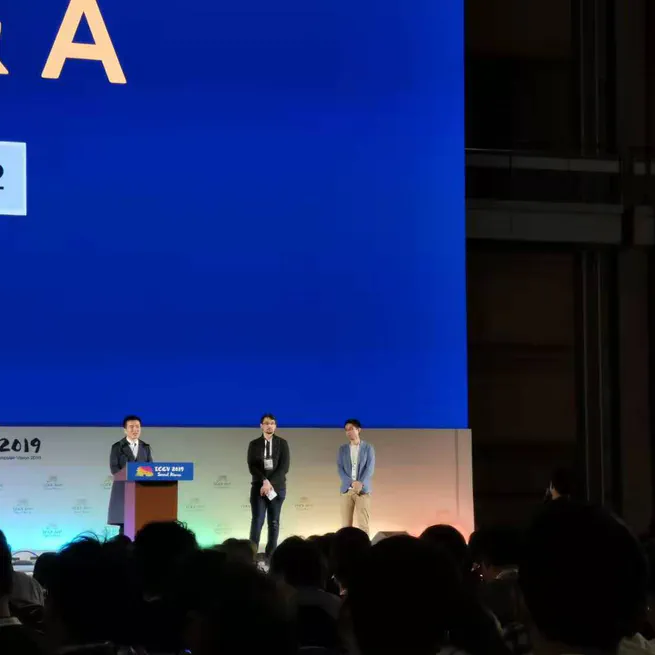
Oral presentation for EMANet

Nov 1, 2019

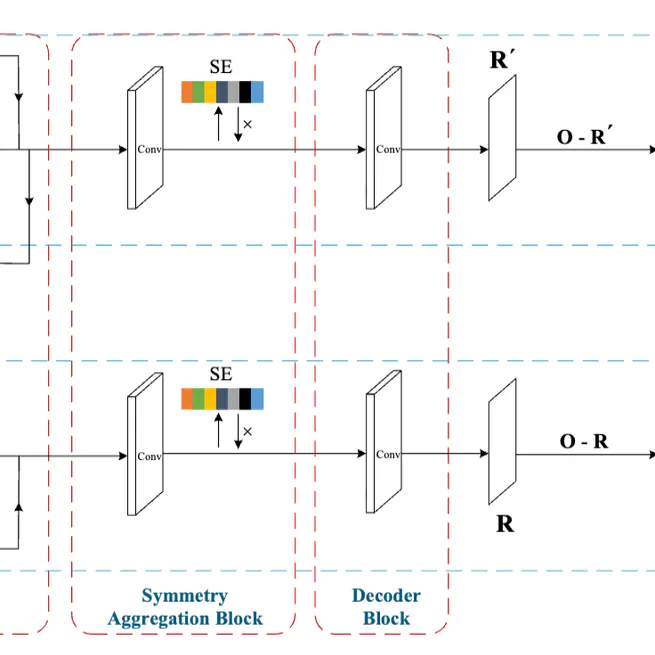
Self-Refining Deep Symmetry Enhanced Network for Rain Removal

A Self-Refining Deep Symmetry Enhanced Network (DSEN) for rain removal that extracts rotation equivariant features and uses a self-refining mechanism to remove accumulated rain streaks in a coarse-to-fine manner.

Sep 22, 2019

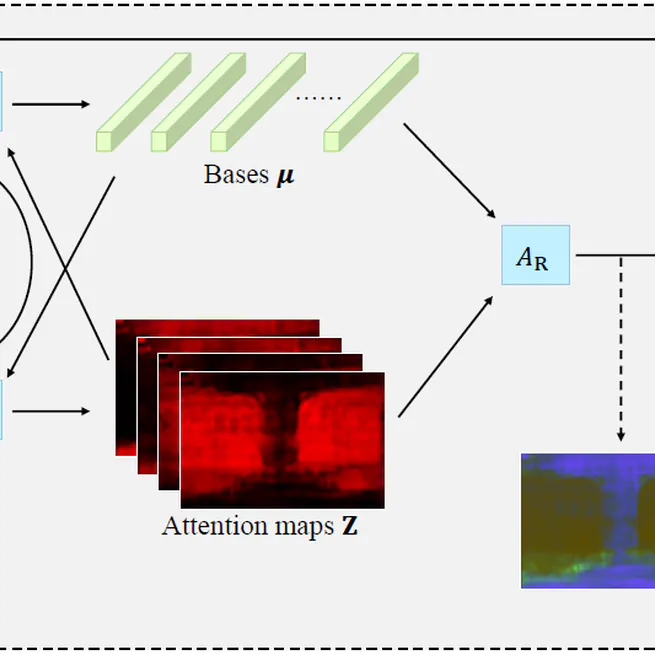
Expectation Maximization Attention Networks for Semantic Segmentation

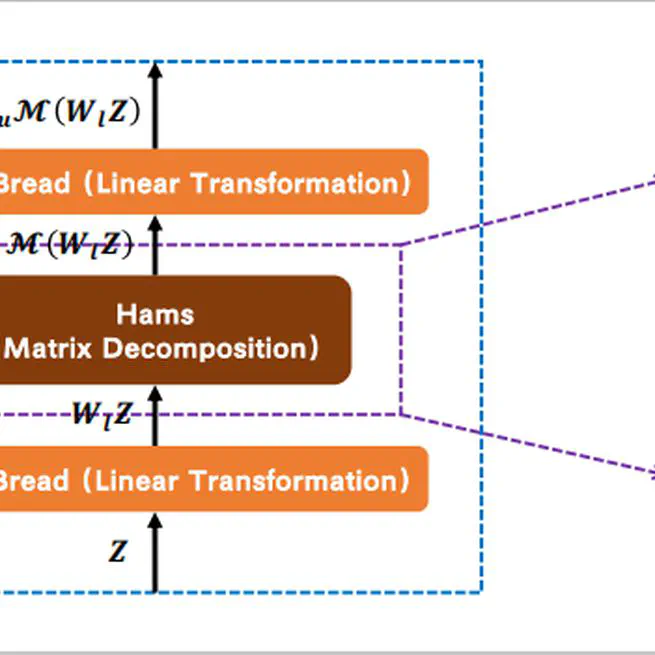
We formulate the attention mechanism into an expectation-maximization manner and iteratively estimate a much more compact set of bases upon which the attention maps are computed.

Jul 22, 2019

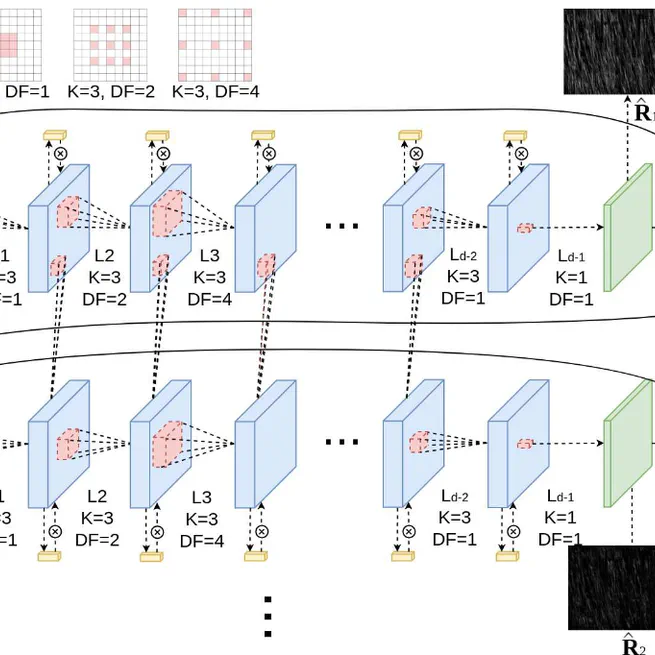
R^2 Net Recurrent and Recursive Network for Sparse View CT Artifacts Removal

We propose a novel neural network architecture to reduce streak artifacts generated in sparse-view 2D Cone Beam Computed To-mography (CBCT) image reconstruction.

Jun 19, 2019

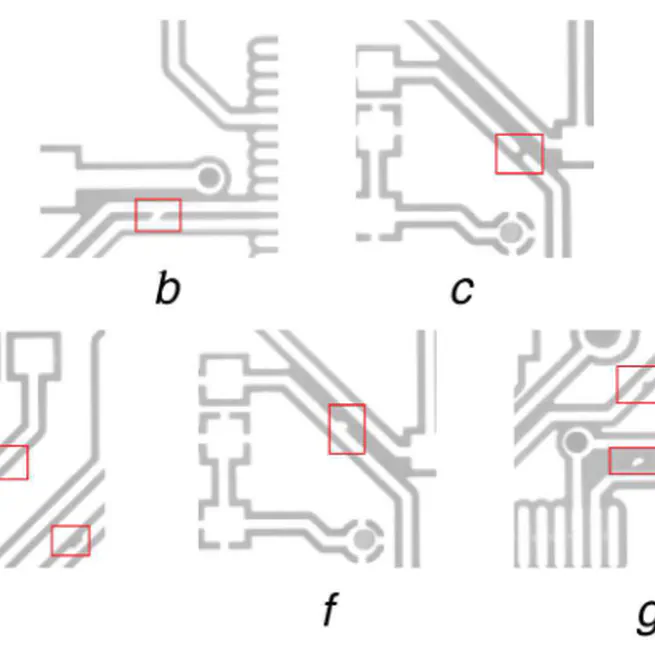
Multi-label classification of PCB defects based on convolutional neural network

A multi-label classification method based on Convolutional Neural Network for PCB defect detection that can simultaneously identify multiple defect types, improving detection accuracy and efficiency.

Oct 22, 2018

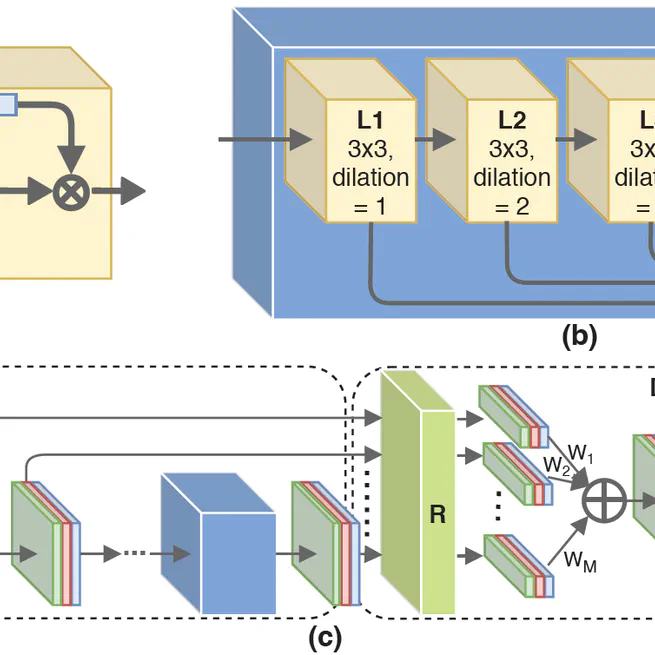
Recurrent Squeeze-and-Excitation Net for Single Image Deraining

We propose a novel deep network architecture based on deep convolutional and recurrent neural networksfor single image deraining.

Jul 19, 2018